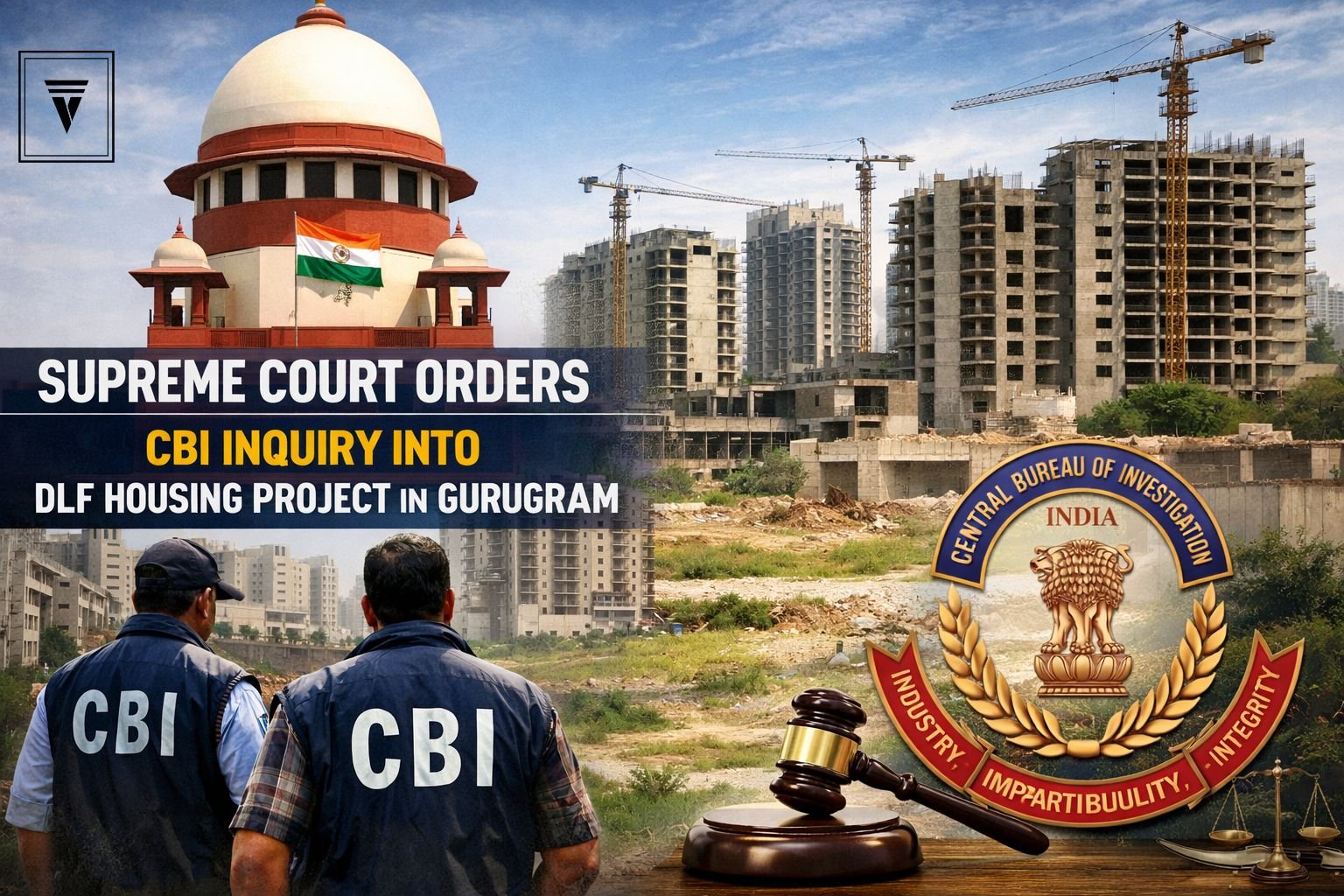
Supreme Court Orders CBI Inquiry Into DLF Housing Project in Gurugram
Supreme Court orders a CBI inquiry into alleged irregularities linked to a DLF housing project in Gurugram. The decision came after several homebuyers raised concerns about differences between the developer’s promises and the actual project conditions. According to Vintage Vista, the move shows that the Supreme Court orders stronger scrutiny when serious complaints arise in large residential projects.
The development has drawn attention across India’s real estate sector. Many buyers believe the step shows how the Supreme Court orders accountability when disputes between developers and homebuyers become significant.
Background of the Case After Supreme Court Orders Inquiry
The dispute revolves around “The Primus,” a residential project in New Gurugram. DLF Home Developers Limited developed the project as part of its premium housing portfolio. The company promoted the project to urban homebuyers who wanted modern apartments and lifestyle amenities. Many buyers invested with high expectations. Later, several concerns emerged regarding the project. As the issue grew, buyers approached the Supreme Court of India for justice.
However, over time, some homebuyers began raising concerns about the project. According to the complaints filed by a group of buyers, there were issues related to possession timelines, certain amenities, and aspects of the development that they believed differed from the original representations made during the booking stage.
These concerns eventually led to legal proceedings. The matter was first taken up by the National Consumer Disputes Redressal Commission (NCDRC), which issued its decision in May 2023. While the commission addressed several grievances and issued directions regarding the dispute, the ruling did not completely satisfy either side.
As a result, both the homebuyers and the developer decided to challenge aspects of the NCDRC order before the Supreme Court. The case has since become an important legal battle involving questions about project commitments, consumer protection, and accountability within the real estate industry.
Why the Supreme Court Orders a CBI Inquiry
During a hearing held on February 25, 2026, the Supreme Court bench reviewed various documents, photographs, and submissions presented by both parties. After examining the available material, the court observed that certain aspects raised by the buyers required further scrutiny.
To ensure an impartial examination of the claims, the court directed the Central Bureau of Investigation (CBI) to conduct a fact-finding inquiry into the matter. The Supreme Court of India asked the Central Bureau of Investigation (CBI) to independently assess the allegations. The agency will review project documents and check whether the developer’s commitments match the actual conditions on the ground.
The Supreme Court of India clarified that the inquiry does not represent a final judgment against any party. The court ordered the investigation only to collect accurate information. This step will help the court review the facts and make a well-informed decision later in the proceedings.
The CBI has been instructed to submit its report before April 25, 2026, after which the court will resume hearings and consider the findings.
Details of the Primus Project
The Primus project includes about 624 residential apartments built as mid- to high-rise towers. According to earlier statements from DLF Home Developers Limited, the project received its occupancy certificate in 2017. The developer offered possession to buyers the same year. The company also stated that electricity, water supply, and other basic infrastructure were ready when buyers received possession.
Despite these claims, several homebuyers maintained that certain aspects of the project did not fully meet their expectations based on earlier representations. These concerns became a central point of discussion during the legal proceedings.
Industry observers say such disputes are common in large residential projects. Marketing promises and buyer expectations do not always match project delivery. These gaps often create disagreements between homebuyers and developers.
Implications for the Real Estate Sector
The Supreme Court’s decision to involve the CBI has sparked conversations across the real estate industry. Experts believe that the case could have wider implications for how housing projects are marketed and delivered in the future.
Over the past decade, India’s real estate sector has undergone major regulatory changes, particularly with the introduction of the Real Estate (Regulation and Development) Act (RERA). The law was designed to improve transparency, ensure timely project completion, and protect the interests of homebuyers.
However, the current dispute highlights ongoing challenges in the real estate sector. Marketing claims, contractual obligations, and actual delivery do not always match.
Market observers and platforms such as Vintage Vista believe the investigation could set an important precedent. The outcome may strengthen developer accountability and protect consumer rights in the housing sector.
What Happens Next – Insights from Vintage Vista
As the investigation process begins, all eyes will now be on the CBI’s findings. According to Vintage Vista, the agency is expected to examine project records, interact with relevant stakeholders, and review the complaints filed by homebuyers before preparing its report for the Supreme Court.
The investigation could involve reviewing construction approvals, project documentation, marketing materials, and other records that may help determine whether any discrepancies existed between promises and delivery.
Once the CBI submits its report in April 2026, the Supreme Court will resume hearings and evaluate the findings. Depending on the conclusions reached, the court may issue further directions that could impact both the developer and the affected homebuyers.
For many buyers who have been following the case closely, the court’s decision to order an independent investigation represents an important step toward clarity and resolution.
Until the inquiry is completed and the Supreme Court delivers its final judgment, the matter remains sub judice, meaning that the legal process is still ongoing.