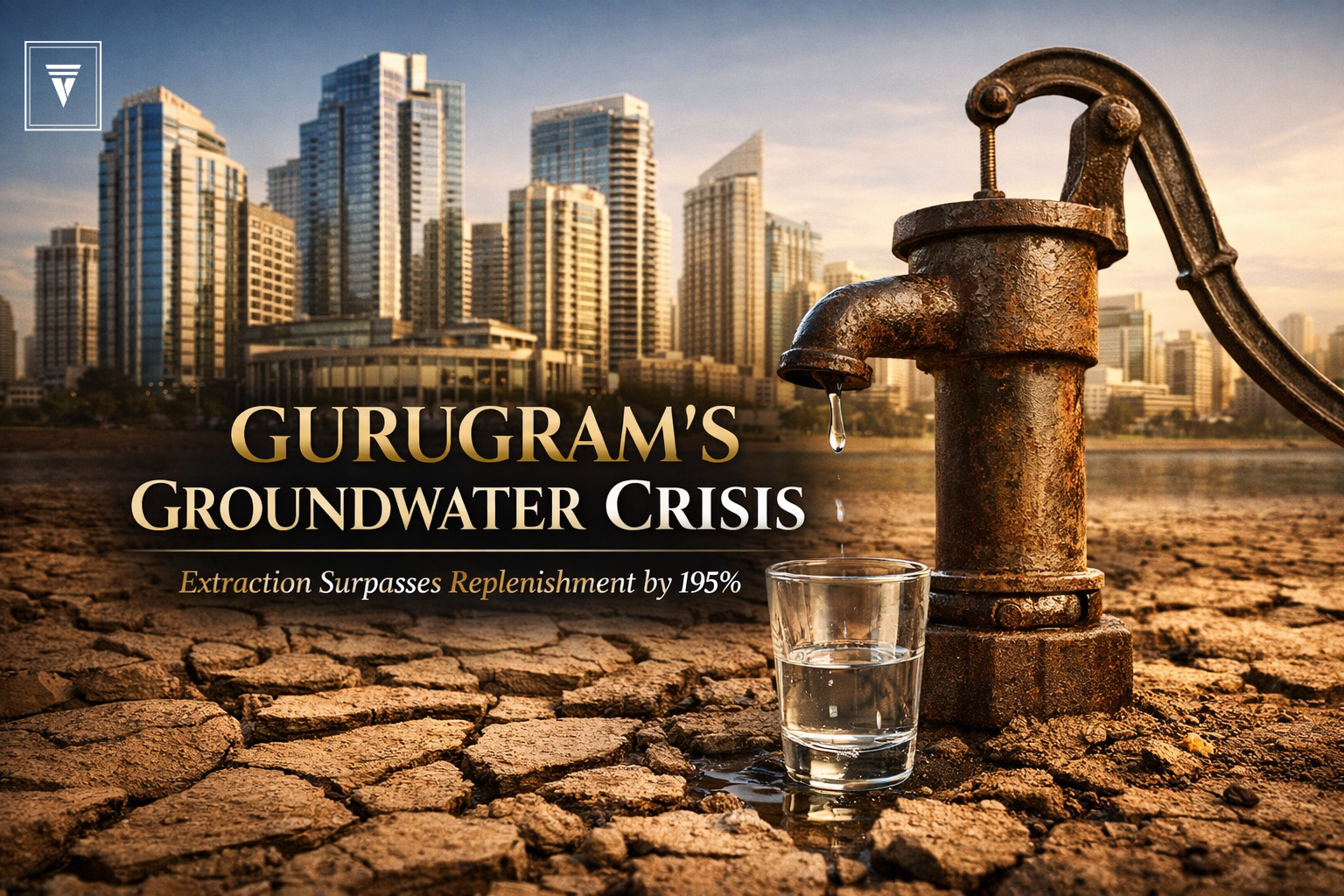
Gurugram’s Groundwater Crisis Deepens as Extraction Surpasses Replenishment by 195%
Gurugram: As one of India’s fastest-growing urban hubs, Gurugram has become a symbol of rapid economic and real estate development. However, the city is now confronting a serious environmental concern. According to insights shared by Vintage Vista, the latest data on groundwater usage highlights a worrying imbalance between extraction and natural recharge. Recent findings from the National Compilation on Dynamic Ground Water Resources of India 2025 reveal that Gurugram extracted nearly 195% more groundwater than its natural replenishment capacity. As a result, experts have raised serious concerns about the long-term sustainability of the region’s water resources.
Groundwater Extraction Far Beyond Sustainable Limits
Data released by the Central Ground Water Board (CGWB) shows that Gurugram withdrew approximately 40,396 hectare-metres (ham) of groundwater during the last assessment year. In comparison, the sustainable extractable limit was estimated at only 22,923 ham.
In simple terms, the district is drawing almost double the groundwater that its aquifers can naturally replenish, creating a severe ecological imbalance. Real estate observers and urban planners, including experts at Vintage Vista, note that such levels of over-extraction could threaten the long-term water security of the region if corrective measures are not implemented soon.
Persistent Over-Extraction Worsens the Gurugram Groundwater Crisis
Although the 2025 extraction figure of around 195% appears slightly lower than the 212% recorded in 2023, the improvement remains marginal. Environmental experts warn that continued over-exploitation at these levels can lead to irreversible consequences.
Possible long-term impacts include:
- Depletion of underground aquifers
- Increased risk of land subsidence
- Declining water quality
- Long-term water shortages across the National Capital Region
Gurugram is officially classified as an “over-exploited” or “dark zone”, a category used when groundwater extraction exceeds 100% of natural recharge capacity.
Key Drivers Behind Gurugram’s Water Crisis
Several structural factors are contributing to the worsening groundwater situation in Gurugram. Rapid urbanisation, expanding infrastructure, and increasing industrial activity are placing enormous pressure on the city’s natural water reserves.
Major drivers include:
- Rapid urbanisation and real estate expansion, increasing water demand in residential and commercial projects
- Industrial growth across manufacturing and corporate sectors
- Agricultural irrigation in surrounding peri-urban villages
- Limited piped water supply, forcing societies and businesses to rely heavily on borewells
According to available estimates:
- 21,000+ ham of groundwater is used for irrigation
- 17,000 ham is consumed by industrial activities
- 5,000+ ham is utilised for domestic consumption
Urban development analysts at Vintage Vista highlight that rapid real estate growth and expanding infrastructure are increasing Gurugram’s dependence on groundwater.
Regulatory Concerns and Enforcement Challenges
The increasing dependence on underground water has also raised regulatory concerns. Recently, the National Green Tribunal criticised authorities in Haryana for failing to effectively control illegal borewell operations across construction sites, industrial facilities, and institutional campuses.
Furthermore, the tribunal directed state agencies to conduct inspections and strengthen monitoring mechanisms to curb unauthorised groundwater extraction.
Environmental groups argue that authorities have introduced policies mandating rainwater harvesting systems and restrictions on groundwater usage. However, enforcement remains inconsistent. As a result, unregulated extraction continues to strain Gurugram’s already stressed aquifers.
Urban Sustainability Risks Linked to Gurugram Groundwater Depletion
Gurugram’s water demand already exceeds its available supply. The city currently receives approximately 570 million litres per day (MLD) of treated surface water. However, peak summer demand can reach nearly 675 MLD, which creates a significant supply gap.
Consequently, residential societies, commercial establishments, and construction projects depend heavily on groundwater to meet their daily requirements.
Experts warn that without strong interventions such as:
- large-scale rainwater harvesting
- wastewater recycling and reuse
- strict regulation of borewell extraction
- sustainable urban planning
Gurugram’s groundwater reserves may face long-term depletion, threatening both environmental stability and future infrastructure growth.
The Road Ahead for Gurugram
For a city that represents India’s rapid urban transformation, Gurugram’s groundwater crisis serves as a powerful reminder that economic growth must be balanced with ecological sustainability.
Urban planners increasingly believe that future development models must integrate water conservation strategies, sustainable infrastructure planning, and responsible resource governance.
Without systemic reforms in water management, Gurugram’s growth trajectory could face serious environmental constraints in the coming decades.
Vintage Vista Insight: Why Sustainable Development Matters
From a real estate and urban planning perspective, Vintage Vista believes the groundwater crisis in Gurugram is more than just an environmental concern—it is a long-term sustainability challenge for the city’s property market and infrastructure ecosystem.
As highlighted by Vintage Vista, sustainable development in rapidly expanding cities will increasingly depend on:
- responsible groundwater governance
- integrated urban infrastructure planning
- strict compliance with environmental regulations
- widespread adoption of rainwater harvesting and water recycling systems
Ensuring water security will not only protect the environment but will also safeguard the future of Gurugram’s real estate growth and urban livability.